
Now Reading: James Dyson: The Inventor Who Turned Failure Into Success
-
01
James Dyson: The Inventor Who Turned Failure Into Success

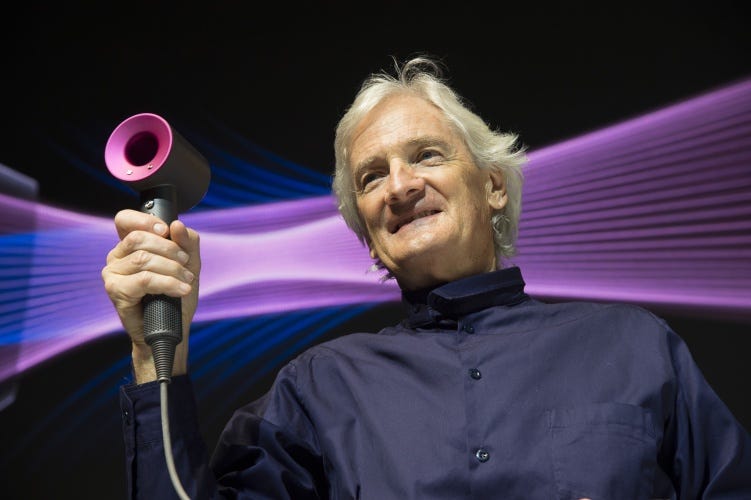
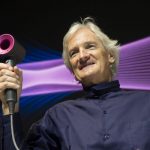
Sir James Dyson is one of Britain’s most influential inventors and entrepreneurs. Best known for creating the bagless vacuum cleaner, he built a global technology company by questioning familiar designs and refusing to accept that everyday products could not be improved.
His career demonstrates that innovation rarely begins with immediate success. It usually starts with a problem, followed by years of experimentation, rejection and repeated failure.
From Art Student to Inventor
James Dyson was born in Norfolk, England, in 1947. He initially studied art and furniture design before becoming increasingly interested in engineering. Although he did not follow a traditional path into the profession, his design education taught him to examine how objects looked, worked and interacted with the people using them.
One of his early inventions was the Ballbarrow, a redesigned wheelbarrow that replaced the narrow front wheel with a large ball. The new design was intended to improve stability and make the product easier to move across soft or uneven ground.
This project introduced an approach that would define Dyson’s career: identify a frustrating everyday problem, challenge the conventional solution and construct a practical alternative.
Reinventing the Vacuum Cleaner
Dyson’s most famous idea began when he became frustrated with his vacuum cleaner losing suction. Traditional machines collected dust in bags, but their performance declined as the bags filled and their pores became blocked.
He wondered whether cyclonic separation, a technology used in industrial environments, could remove dust from the air without requiring a bag. Turning that idea into a commercial product proved extremely difficult.
Dyson reportedly developed thousands of prototypes over several years. Each unsuccessful model revealed another problem that needed to be solved. Rather than viewing these attempts as wasted effort, he treated them as part of the engineering process.
Manufacturers initially rejected the invention. Bagged vacuum cleaners generated continuing revenue through replacement bags, so established companies had little incentive to support a product that eliminated them.
Dyson eventually launched his own machine. The transparent dust container allowed customers to see the technology working, while its bagless design offered a clear practical advantage. The product became successful, and the Dyson name grew into an international brand.
Building a Global Technology Company
Dyson expanded beyond vacuum cleaners into air treatment, hand dryers, hair-care technology, lighting and other consumer products. The company became known for high-speed electric motors, aerodynamic research and distinctive industrial design.
Today, its research interests include robotics, artificial intelligence, machine learning, material science, battery technology and advanced motors. According to the company’s official biography, engineers and scientists make up approximately half of its global workforce.
Not every Dyson project has reached the market. The company invested heavily in developing an electric vehicle before cancelling the programme because it was not considered commercially viable. The decision illustrated an important reality of invention: ambitious experiments can produce valuable knowledge even when they do not become successful products.
Failure as Part of Innovation
Dyson’s philosophy is closely associated with persistence. He believes that mistakes provide information that success often cannot. A prototype that fails shows an engineer exactly where the design needs to improve.
This approach challenges the popular image of invention as a sudden moment of inspiration. Dyson’s career suggests that innovation is more often a long process of testing, correcting and beginning again.
His experience also demonstrates the commercial risks facing inventors. Creating a working product is only one part of the challenge. An inventor must also secure funding, protect the idea, establish manufacturing and convince consumers to change familiar habits.
Supporting Future Engineers
In 2002, Dyson established the James Dyson Foundation to encourage more young people to pursue engineering and science. The organization provides educational resources and operates the annual James Dyson Award, an international competition for student and graduate inventors.
The competition asks participants to design something that solves a genuine problem. Previous entries have addressed medical care, renewable energy, recycling and environmental sustainability. Winners receive funding and international recognition to help develop their inventions further.
Dyson also founded the Dyson Institute of Engineering and Technology. Its students combine academic study with paid engineering work, gaining practical experience while completing their degrees.
A Complicated but Lasting Legacy
Like many prominent business leaders, Dyson has attracted criticism as well as admiration. His political opinions, corporate decisions and international business arrangements have generated public debate. These controversies form part of the broader discussion about the responsibilities of wealthy entrepreneurs and global companies.
However, his influence on engineering and product design remains significant. He helped transform an ordinary household appliance into an example of advanced technology and demonstrated that established industries can be disrupted by questioning assumptions that others no longer notice.
James Dyson’s story is ultimately about persistence. His success did not come from avoiding mistakes, but from studying them. By treating failure as evidence rather than defeat, he turned a frustrating household problem into a global technology business—and encouraged a new generation of inventors to keep experimenting.